
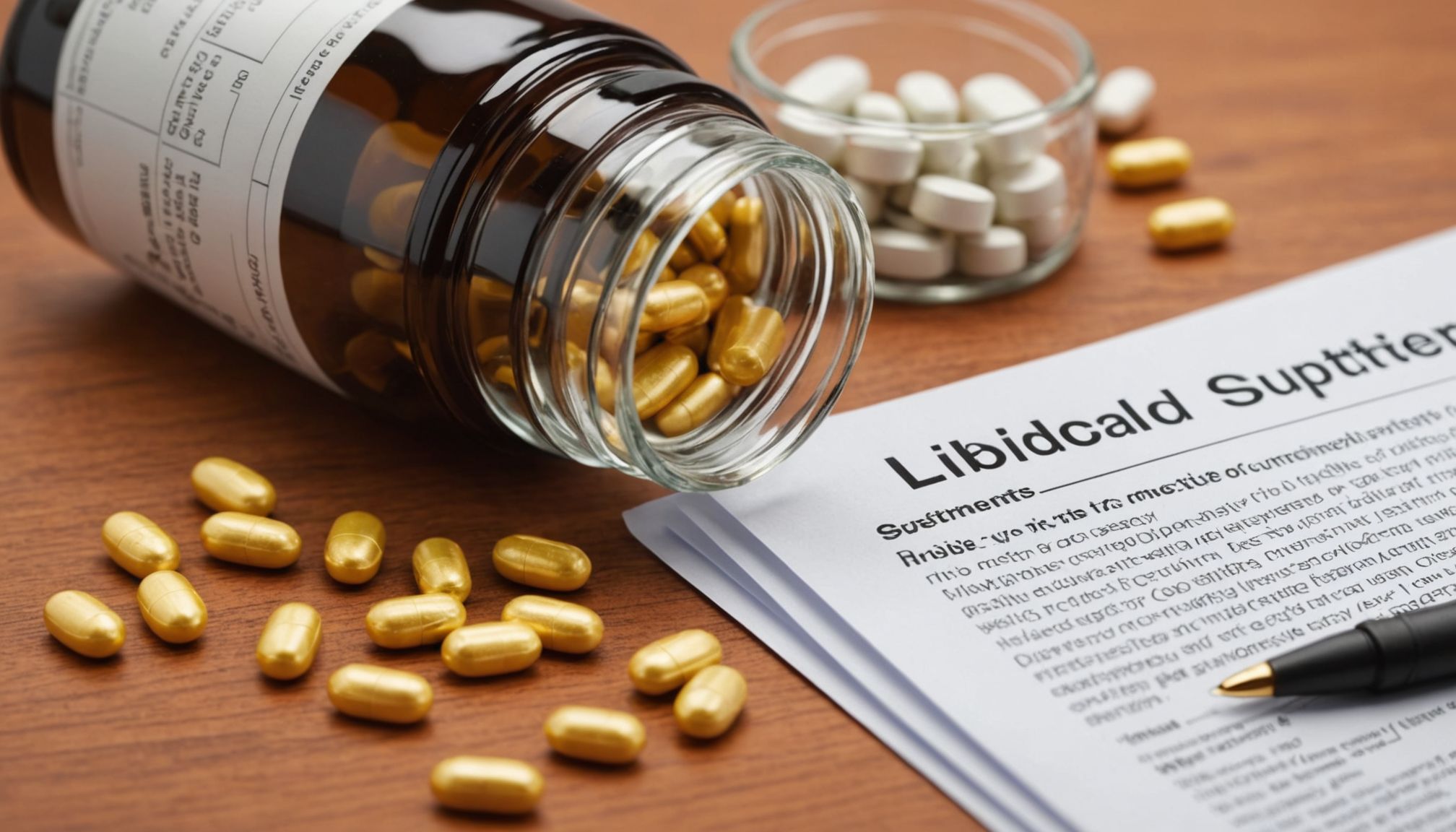
Libido supplements: what they are, how they’re used, and how to choose safely
Disclaimer: This article is for educational purposes only and does not replace professional medical advice, diagnosis, or treatment. Libido changes can have many causes. Always consult a qualified healthcare professional before starting or stopping any supplement, especially if you have a medical condition, are pregnant, or take prescription medications.
Key terms (glossary)
- Libido
- A person’s overall interest or desire for sexual activity.
- Libido supplements
- Dietary supplements marketed to support sexual desire, arousal, or related factors.
- Adaptogens
- Plant substances believed to help the body adapt to stress (e.g., ashwagandha).
- Testosterone
- A hormone involved in sexual desire, muscle mass, and energy in all sexes.
- Estrogen
- A group of hormones important for sexual function, bone health, and mood.
- Blood flow
- The circulation of blood; adequate flow is essential for arousal.
- Herbal extract
- A concentrated preparation derived from plants.
- Amino acids
- Building blocks of proteins; some play roles in nitric oxide production.
- Nitric oxide
- A molecule that helps relax blood vessels and improve circulation.
- Clinical evidence
- Findings from well-designed human studies evaluating safety and effectiveness.
- Placebo effect
- Perceived improvement due to expectations rather than an active ingredient.
- Contraindications
- Situations where a supplement should not be used due to risk.
- Quality assurance
- Processes that ensure a product meets safety and labeling standards.
- Drug–supplement interaction
- When a supplement alters the effect of a medication.
Clear explanation
Why libido can change
Libido is influenced by physical, psychological, and social factors. Common contributors include stress, sleep quality, hormonal shifts, chronic illness, relationship dynamics, and certain medications (such as antidepressants or blood pressure drugs). Business owners and sales professionals, for example, often experience high stress and irregular schedules, which can indirectly affect sexual desire.
How libido changes may show up
Manifestations vary: reduced interest in sex, difficulty with arousal, decreased satisfaction, or fatigue that dampens desire. These signs may be temporary or persistent. Supplements are often marketed to address these symptoms, but outcomes differ widely among individuals.
How concerns are evaluated
A proper evaluation typically starts with a medical history and may include lab tests for hormones, metabolic health, or nutrient deficiencies. Understanding the root cause helps determine whether lifestyle changes, counseling, medical treatment, or cautious supplement use is appropriate.
Approaches, including supplements
Libido supplements commonly contain herbs (such as ginseng or maca), vitamins (like vitamin D or B-complex), minerals (zinc), or amino acids (L-arginine). Evidence ranges from modest to inconclusive, and quality varies by brand. Supplements should be considered supportive—not curative—and integrated with broader health strategies.
Reader checklist
What you can do
- Review lifestyle basics: sleep, stress management, and regular physical activity.
- Check labels for standardized extracts and third-party testing.
- Start with one product at a time and monitor changes for several weeks.
- Discuss supplement plans with a healthcare professional.
- Consider credible educational resources from our Business insights section to understand market quality and trends.
What to avoid
- Products promising instant or guaranteed results.
- Combining multiple libido supplements without guidance.
- Ignoring potential drug–supplement interactions.
- Using supplements as a substitute for medical evaluation.
When to see a doctor urgently
- Sudden, unexplained loss of libido with fatigue or mood changes.
- Sexual dysfunction accompanied by chest pain or shortness of breath.
- Signs of hormonal disorders (rapid weight change, hair loss, hot flashes).
- Adverse reactions after starting a supplement.
| Term | In simple words | Why it matters |
|---|---|---|
| Adaptogens | Stress-supporting herbs | Stress can lower libido; managing it may help indirectly |
| Blood flow | How well blood circulates | Essential for physical arousal |
| Hormones | Body’s chemical messengers | Imbalances can affect desire and energy |
| Clinical evidence | Proof from human studies | Helps judge whether a supplement is likely to work |
Specialist comment (generalized): “In clinical practice, changes in libido are rarely due to a single factor. Supplements may offer limited support for some people, but they work best when combined with lifestyle improvements and appropriate medical care.”
From a market perspective, libido supplements are a growing segment within wellness. Understanding regulation, consumer expectations, and ethical marketing is essential—especially for entrepreneurs. You can explore related strategies in our Sales Business resource hub and read practical perspectives in a recent Small Business Post on wellness products.
Sources
- National Center for Complementary and Integrative Health (NCCIH) – Dietary Supplements Overview
- U.S. Food and Drug Administration (FDA) – Dietary Supplement Products & Ingredients
- Mayo Clinic – Low sex drive and contributing factors
- World Health Organization (WHO) – Sexual health and well-being resources
Note: Evidence for specific libido supplements varies, and high-quality randomized controlled trials are limited for many ingredients.